Figure 1 from Control of Meiotic Crossovers From Double Biology Diagrams aneuploidy is due to defects in crossing over and distal cohesion is currently under investigation; the finding that mis-segregation of entire homologous chromosomes during meiosis I is a major cause of aneuploidy in human oocytes is suggestive of such a defect [5,7,8]. The dHJ is a critical meiotic crossover intermediate During meiosis (see Glossary) a diploid cell undergoes a single round of DNA replication followed by two divisions to form haploid gametes (Figure 1 A).A homologous recombination pathway is also executed which results in the reciprocal exchange of flanking regions between homologous chromosomes; this is referred to as crossing over. In addition to its role in promoting fitness through the These hotspots influence traits and potentially contribute to disease susceptibility or resistance. Genetic elements such as PRDM9 regulate the location and frequency of recombination events, directing crossing over to specific genomic regions. Crossing over's role in generating allelic variation is crucial for populations.

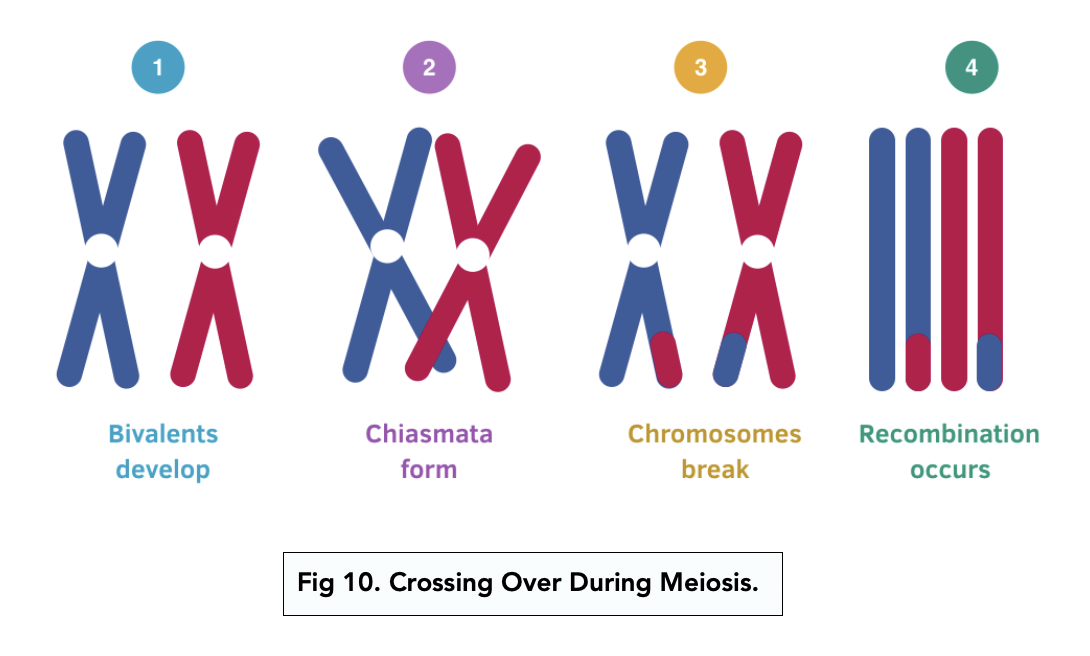
Chiasmata are the visible indicators of crossover events, representing the physical connections where genetic material has been exchanged. The formation of chiasmata is a critical phase in meiosis, as it ensures that homologous chromosomes remain connected until they are pulled apart during cell division. Crossing over between homologous chromosomes in meiosis is essential in most eukaryotes to produce gametes with the correct ploidy. Meiotic crossovers are typically evenly spaced, with each homolog pair receiving at least one crossover. These findings and studies involving fine-scale mapping of meiotic crossover events have led to a new
Crossover and noncrossover recombination during meiosis: timing and ... Biology Diagrams
Meiosis is a fundamental process in sexual reproduction, crucial for generating genetic diversity. A key event within meiosis is crossing over, an exchange of genetic material between homologous chromosomes. This process contributes to variation among offspring and plays a critical role in evolution by enabling new gene combinations

♦ Meiosis can be divided in two stages: meiosis I and meiosis II. It is in the prophase of meiosis I that crossing over of the chromosomes takes place, and the homologous chromosomes are separated into two daughter cells. In meiosis II, the sister chromatids are pulled apart from each other to give rise to four haploid daughter cells. Crossing over is coupled to late meiotic prophase bivalent differentiation through asymmetric disassembly of the SC. J Cell Biol 168: 683-689. [PMC free article] [Google Scholar] Nakagawa T, Ogawa H. 1999. The Saccharomyces cerevisiae MER3 gene, encoding a novel helicase-like protein, is required for crossover control in meiosis.
