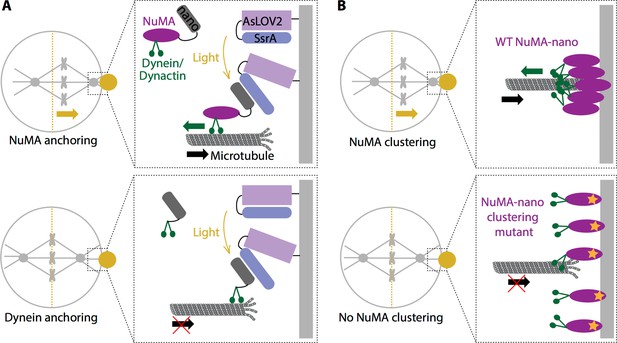
Cell Division Shining light on spindle positioning Biology Diagrams Abstract Accurate positioning of spindles is essential for asymmetric mitotic and meiotic cell divisions that are crucial for animal development and oocyte maturation, respectively. The predominant model for spindle positioning, termed "cortical pulling," involves attachment of the microtubule-based motor cytoplasmic dynein to the cortex, where it exerts a pulling force on microtubules The spindle positioning checkpoint (SPOC) ensures the correct positioning of the mitotic spindle during cell division. Proper spindle alignment is crucial for successful mitotic exit and cytokinesis, as it determines the plane of cell division and ensures that sister chromatids are accurately segregated to daughter cells [34], [5].
Proper spatial control of the cell division plane is essential to any developing organism. In most cell types, the relative size of the two daughter cells is determined by the position of the mitotic spindle within the geometry of the mother cell. We review the underlying mechanisms responsible for positioning of the mitotic spindle, both in cases where the spindle is placed in the center of
Spindle positioning and its impact on vertebrate tissue ... Biology Diagrams
Abstract The mechanical environment of a cell has a profound effect on its behaviour, from dictating cell shape to driving the transcription of specific genes. Recent studies have demonstrated that mechanical forces play a key role in orienting the mitotic spindle, and therefore cell division, in both single cells and tissues. Abstract Accurate positioning of spindles is essential for asymmetric mitotic and meiotic cell divisions that are crucial for animal development and oocyte maturation, respectively. The predominant model for spindle positioning, termed "cortical pulling," involves attachment of the microtubule-based motor cytoplasmic dynein to the cortex, where it exerts a pulling force on microtubules that The cell division axis is determined by the position of the mitotic spindle. How geometrical cues influence spindle orientation is analysed in cells cultured on micropatterns. These experiments
.jpg)
Summary Proper spatial control of the cell division plane is essential to any developing organism. In most cell types, the relative size of the two daughter cells is determined by the position of the mitotic spindle within the geometry of the mother cell. We review the underlying mechanisms responsible for positioning of the mitotic spindle, both in cases where the spindle is placed in the

External forces control mitotic spindle positioning Biology Diagrams
The orientation of cell divisions regulates tissue architecture and cell fate and depends on mitotic spindle positioning, which is controlled by intracellular and extracellular cues. Building on
